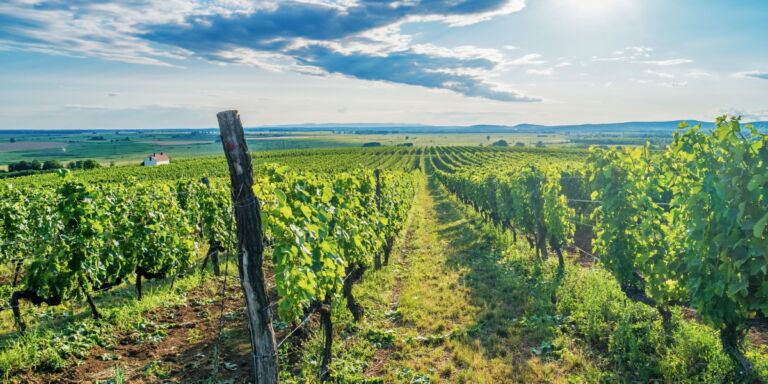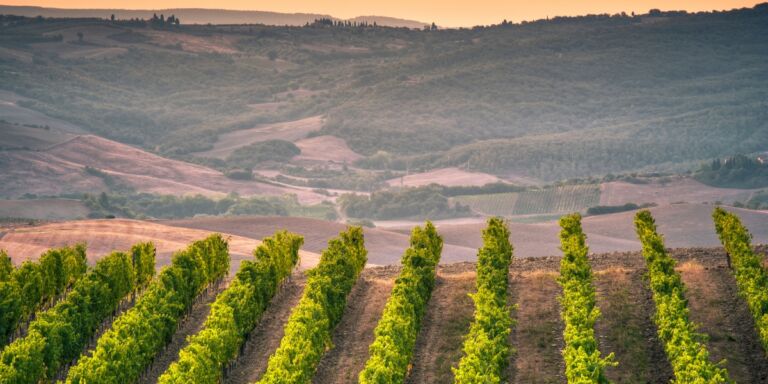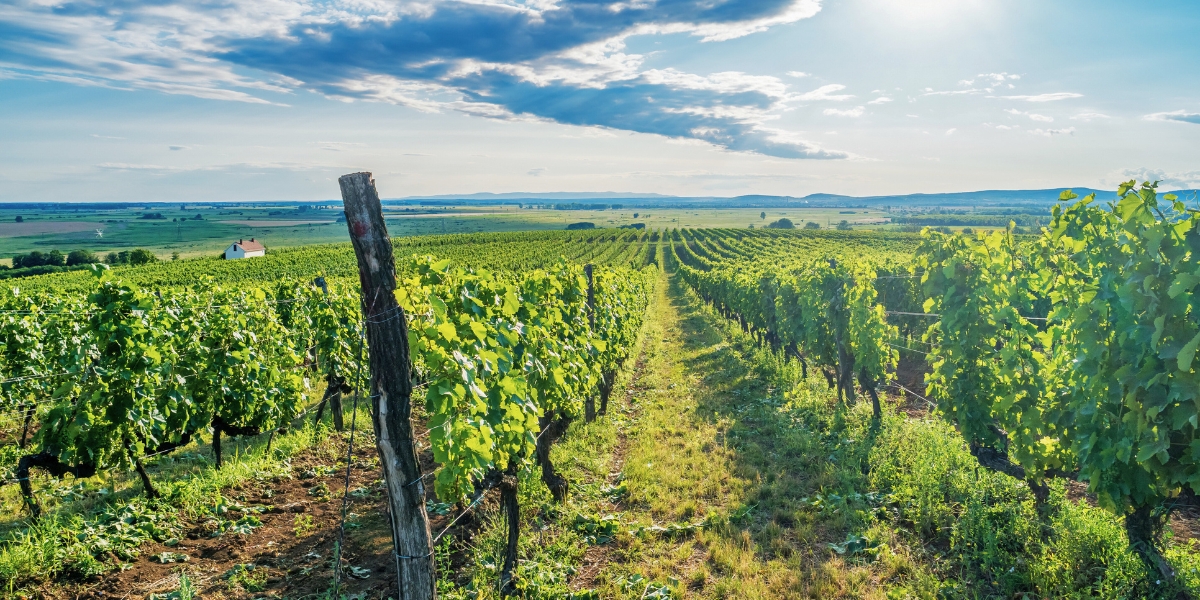
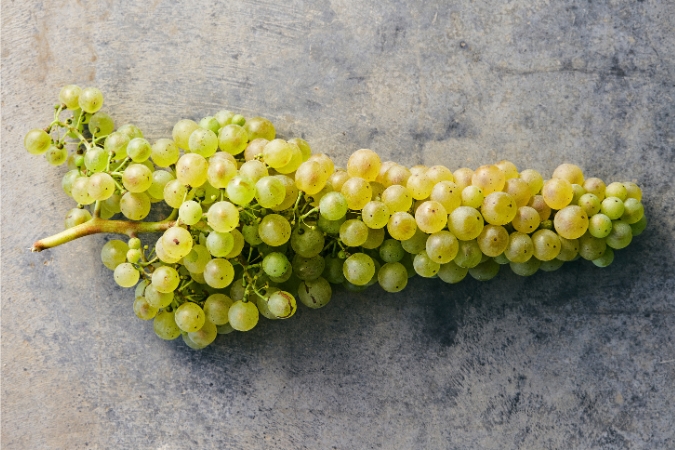
Wines made from Furmint, Hungary’s flagship white grape, have become a common sight on shop shelves in recent years, making their way beyond the cellars of specialist merchants and into restaurants and homes around the world. Many of them are the famed noble rot wines, primarily Tokaji Aszú, but a range of other styles demand investigation; Furmint is a grape with many faces, offering versatility (and value) that is difficult to match.
The ability to efficiently accumulate sugar allows Furmint to yield the lusciously sweet and long-lived Aszú and Eszencia wines but the grape is also a neutral varietal with naturally high acidity. This means it can be made into myriad styles, from bone-dry and youthful to rich and age-worthy, as well as exceptionally crisp and complex sparkling wines. Its neutrality is much admired in the modern winemaking era, as the grape expresses the nuances of terroir particularly well. This quality has resulted in Hungary’s single-vineyard Furmint wines gaining well-deserved attention.
At one of Tokaj’s most renowned estates, Tokaj Oremus, the team makes six wines all made of at least 50% Furmint. As well as the traditional Tokaji Aszú wines (in 3, 5 and 6 Puttonyos) and Aszú Eszencia (the rare, nectar-like noble rot wine, which can age for centuries), Tokaj Oremus also produces two dry wines: its flagship, Mandolás, and the single-vineyard Petrács.
‘The quality and level of acidity, the potential in the phenolic structure, the potential for ageing and the ability to convey terroir’ are all the characteristics of Furmint that excite Róbert Kindl, the director at Tokaj Oremus. ‘Some of the dry Furmints are made in a sophisticated way and can challenge the most highly acclaimed great white wines of the world.’
Furmint’s resilience and acidity are valuable traits as climate change progresses
Furmint is part of a ‘long and interesting winemaking culture in Tokaj’ but it is also key in shaping the future of Hungarian wine as the ‘most developed single varietal’. It is one of the country’s flagship grapes, a representation of Hungarian terroir and heritage, yet it is also becoming an increasingly significant grape for the rest of the wine-producing world too; Furmint’s resilience and acidity are valuable traits as climate change progresses. ‘Furmint seems to adapt well to the rising temperatures and is preserving its acidity in our vineyards still,’ says Kindl. ‘This makes it a very relevant varietal. I have the impression that winemakers around the world are seeing more and more potential to play with Furmint.’
This month, Furmint February sweeps its way across Hungary and into some of the world’s most wine-savvy cities, including Paris, Zurich, Berlin, Warsaw, New York and London. With a series of Furmint & Friends-themed dinner parties hosted by Wines of Hungary, guests have the chance to experience the gastronomic potential of Furmint as its many different styles are paired with a variety of cuisines, including seasonal dishes prepared by top chefs.
The initiative has been an opportunity for many Furmint producers to reposition Hungarian wine on the world stage. ‘It provides an exposure that keeps the name and the concept visible in the world,’ explains Kindl. So far, the response has been positive at both trade and consumer level. ‘Without exaggeration, when consumers taste these dry and sweet wines, they are surprised by the exceptional character and high quality.’
Tasting the wines in context with bespoke food pairings has also been transformative in challenging preconceptions. ‘It is important that, through these events, we can highlight the versatility of these wines in gastronomy.’ Kindl describes how the sweet wines can be paired with main courses, not just desserts. Foie gras, roasted meats, smoked fish, blue cheese and spicy Asian dishes are all considered to be successful savoury food pairings with Tokaji Aszú.
Furmint is an exciting alternative to mainstream varieties
Sparkling Furmint wines are also an exciting choice to accompany dinner, coming in many styles from various regions across Hungary. Labelled as ‘Pezsgő’, they can be made in the traditional method or by charmat (the most accomplished wines in the former) and are part of a sparkling winemaking heritage that dates back to the late 1800s. The sparkling Furmint wines of Tokaj are particularly renowned for expressing a defined sense of place, showing a vibrant acidity and nerve, especially when grown on volcanic soils.
Whether it be a honey-sweet wine from Tokaj, a mineral Brut Nature from Badacsony or a lees-aged dry style from Somló, Furmint is the true definition of a ‘discovery grape’. Multifaceted and with the qualities to play a role in protecting wine from the threat of global warming, Furmint is an exciting alternative to mainstream varieties, offering originality, versatility, value and some remarkable wines.