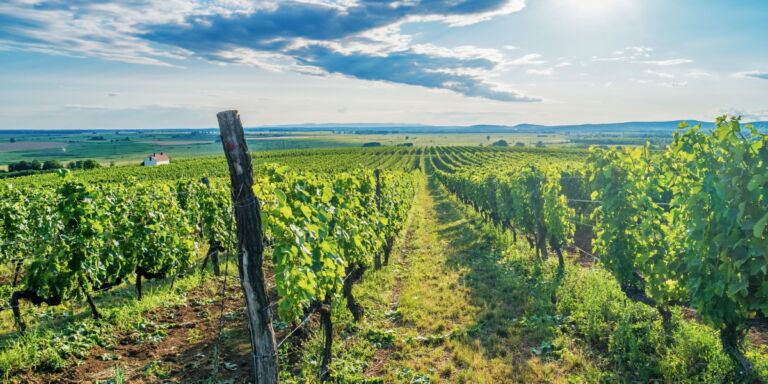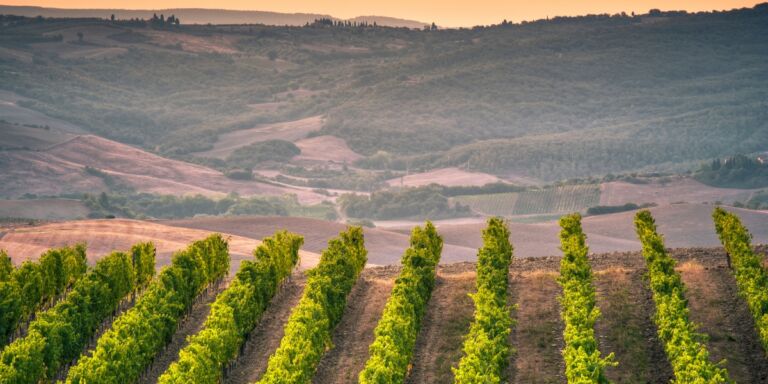
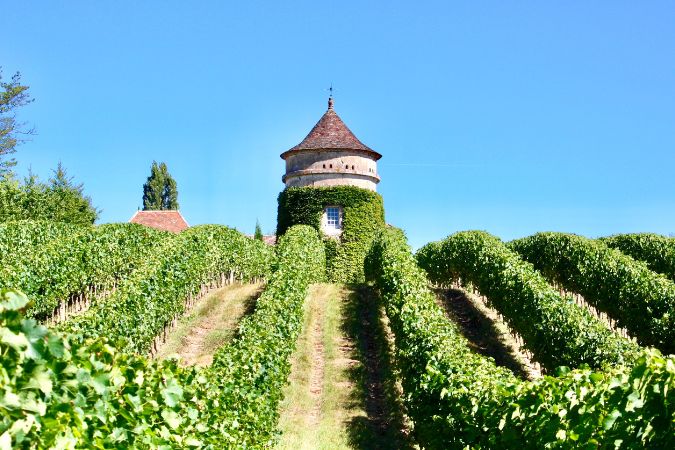
There’s green, and then there’s emerald, the vivid colour of a shot of absinthe. The Dordogne region is the latter. It has been well watered. The weather changes with British frequency – skies clear one minute and the next scudding with bruise-like clouds that act as a giant sprinkler on the soft hills of gnarled, finger-like vines. On the hill is a blueshuttered château with two squat turrets. Ask AI to give you a postcard scene of pastoral France, and it would likely regurgitate this scene – with good reason. The Dordogne has long been called ‘the land of 1,001 castles’, and while that’s slightly exaggerated, there are nevertheless more than 600 châteaux in the region.
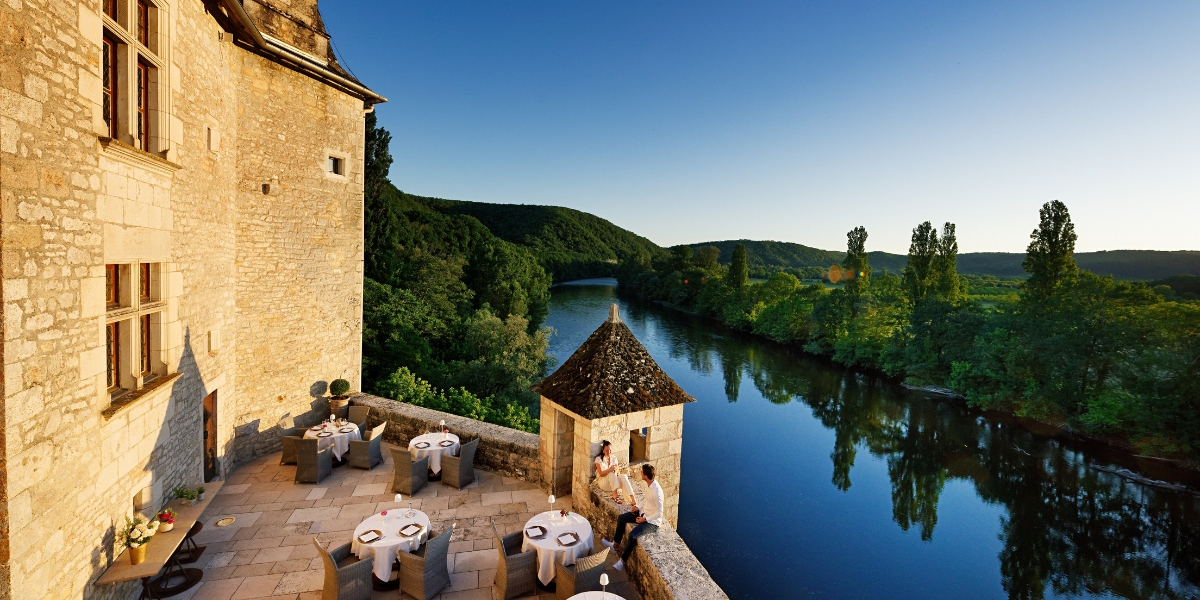
I’m in Saussignac, one of the many AOCs (appellations d’origine contrôlée) in the region, known for sweet wines grown in clay soil. There’s renown for the wines of Monbazillac and Bergerac, but other AOCs in the Dordogne – Pécharmant, Rosette, Côtes de Bergerac – aren’t exactly household names. The Romans introduced vines to the Dordogne over 2,000 years ago. Although it’s a major wine-producing region, it has passed under the radar, largely due to being overshadowed by its noisy neighbour, Bordeaux. It means that, to this day, you can get great-quality wine in the Dordogne for very reasonable prices, and smaller winemakers have flourished. And while ‘the land of 600-and-something castles’ doesn’t have the same ring to it, many châteaux have been transformed into upscale hotels, often with on-site vineyards. Others have capitalised on the region’s gastronomy, like Château de la Treyne, whose Michelin-starred restaurant boasts a view over the River Dordogne.
A major wine-producing region, the Dordogne has largely been overshadowed by its noisy neighbour, Bordeaux
The region has long held great affinity with the English. In the 12th century, Eleanor of Aquitaine married Henry II of England, and Aquitaine, including the Dordogne (then Périgord), became English. Two centuries later, during the Hundred Years’ War (which actually lasted 116 years – more fake news), huge swathes of the Dordogne were under English rule. Due to the abundance of monasteries and abbeys, wine growing really took off around the same time, and the River Dordogne was used to ship cargoes down to the Atlantic (it meets the Gironde Estuary just north of Bordeaux). Although there are heaps of British expats in the Dordogne and a tea room in virtually every town, wine exports were squashed under Bordeaux’s famous name. In spite of its substantial production, the Dordogne became known instead for its culinary delicacies: truffles, foie gras, walnuts and more.
But there were also other factors at play that stopped its wines getting international recognition, including the sheer variety produced. ‘Although it’s a small area of just 10,000ha, we’ve got 13 different AOCs,’ says Julien Montfort, wine merchant and winemaker at Julien de Savignac. ‘It’s one of the things that keeps our wines from being well known internationally: we don’t produce enough of each AOC.’ Much of the Dordogne’s wine stays in Europe, but the United States is also a major market (well, for now), and Montfort says that, increasingly, they export internationally renowned sweet wine Monbazillac as far as Africa.
I spend the night at La Chartreuse du Bignac, a 17th-century 12ha estate set among forest land, with exposed stone walls. There are two lakes visible from my room, and the restaurant looks out over church spires and toffee-coloured villages. My humble French onion soup is beautifully presented, and it comes with an encyclopaedic wine menu. The Côtes de Bergerac I opt for comes from Domaine de l’Ancienne Cure and is delicately spiced, the cinnamon and nutmeg notes warming on a winter’s evening.
My next stop is Bergerac, which couldn’t be more medieval were it dressed in a flowing tunic. Wooden beams prop up the upper floors of houses that hang over the ground floor like timber muffin tops. (Houses were taxed according to their footprints, so this was a way to reduce the taxable area.) Between the timber frames, the neat terracotta rows of pebbledash look like an Orla Kiely wallpaper. Bergerac’s heyday began in the 11th century, when feudal lords built their châteaux on the riverbank, and trade began. The first bridge arrived two centuries later, a nifty opportunity to collect tolls from people entering or leaving the town, of which there were many. Wine was shipped downriver in gabarres, bucket-like sailing boats with a trough in the middle for transporting barrels. Several hulls the colour of dark chocolate line the river, and during the summer, companies run gabarre boat trips.
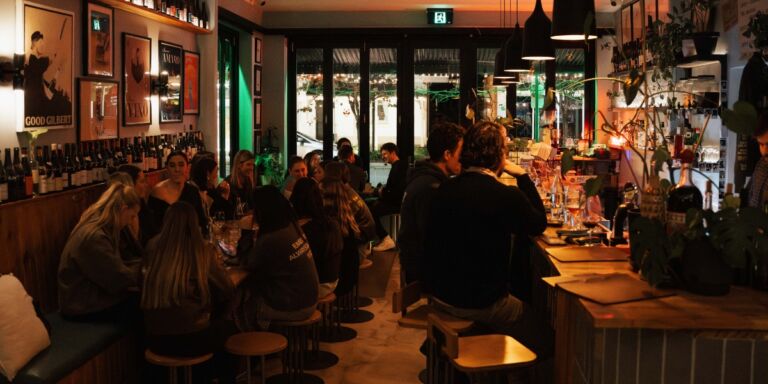
Yet when the tourist information office doubles up as a wine cellar, you know you’re in a region that takes its wine seriously. It has a terrace overlooking the river and another in a cloistered courtyard hung with strings of Edison bulbs, and there’s no better place in town to uncork a bottle alfresco in fine weather. Bergerac is the perfect base for wine lovers, with a plethora of château wineries less than 10km from the city centre. Château de Monbazillac specialises in white wines the colour of syrup – AOC Monbazillac, made from Semillon, Sauvignon Gris and Muscadelle – that pair perfectly with the region’s richest speciality: foie gras (or a fruity dessert). Château de Tiregand, just north of the River Dordogne, is Montfort’s recommendation for AOC Pécharmant and for learning about the history of the appellation. Its Cuvée Grand Millésime is produced only during the best harvest years in the driest parts of its vineyards.
Although orange wine is thought to be some 8,000 years old, it’s taking time to win over the French, and it’s still comparatively rare to see it on a restaurant menu. This makes it all the more surprising when the first wine I taste at Château Feely – a Saussignac winery specialising in organic, biodynamic and natural wines – is an orange. The story of the South African owners’ life unfolds like a romcom. They arrived in Saussignac 20 years ago, two young children in tow, ditching corporate jobs to open an organic winery and write books about it. Mille Fleurs looks like a yellow wine from Jura and smells like syrup or honey; when I taste it, it’s not sweet at all, but smoky, having taken on the flavour of flint in the soil. Caro Feely tells me to pair it not with foie gras or magret de canard, but with a spicy dal. If you can find that in the Dordogne, that is…
Although pigs naturally root for truffles, they have a tendency to scoff the lot
There’s a foie-gras road trip you can take through the Dordogne, but the means of production being highly controversial, I decide to hunt down a different, much less contentious, local delicacy: truffles. I’d imagined pigs with septum piercings rooting in the soil, but as Fabien Lafon, a fourth-generation truffle hunter in Ste-Alvère, tells me, there’s only one farmer left in the Dordogne who uses pigs. Although they naturally root for truffles without being trained, they have a tendency to scoff the lot, so most truffle hunters work with dogs.
Our furry truffle hunter is a slightly senile-looking lapdog. Chico the Yorkshire Terrier is 10 years old, with a laughing mouth that gives him a contented yet vacant expression. He’s already unearthed several truffles, which he’s more than happy to swap for slices of salami. Chico may look unsubtle, but his job is one of mystery: truffle farmers rarely divulge their exact locations for fear of both dogs and truffles going missing. Lafon sells his wares at Ste-Alvère’s village market.
I’ve tried truffles in many shapes and forms, but Le Mouton Noir in Vergt is the first place I’ve tried truffles in gin. Launched in December 2024, Vesu’gin was conceived by three Périgord brothers and their cousin over a Christmas gin and tonic. It smells more truffley than it tastes, the flavour crisp but slightly earthy. It’s made from all natural, local ingredients: black truffle, juniper, pepper and dried grapes. It’s incredibly refreshing, the pepper tickling my tongue in a moreish way. It’s also hangoverproof, I’m told, but we’ve all heard that one before.
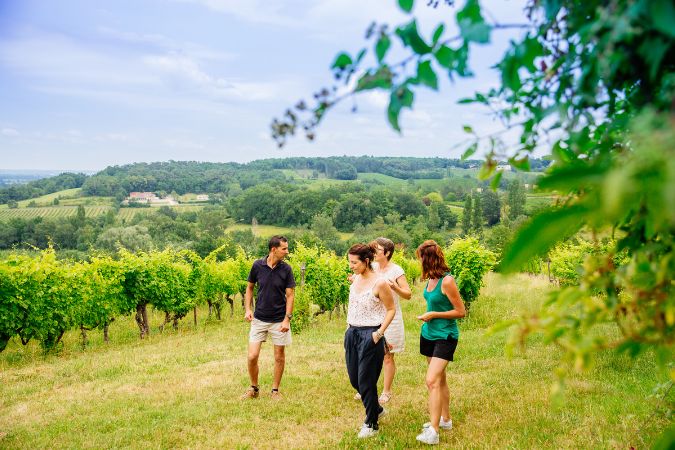
The little roads take me through forest land, vines and past ramshackle châteaux, and the Périgordins seem allergic to using their indicators. The industrial suburbs of Périgueux, capital of the Dordogne, are somewhat a shock after so much greenery, but in the city centre I find a warren of criss-crossing medieval streets once more. The immense cathedral, with domes shaped like bird cages, dominates the city. Its oldest parts were built in the 11th century, and inside it’s surprisingly plain and austere, although the intricate stained-glass windows are kaleidoscopic.
I eat at L’Essentiel, a Michelin-starred joint tucked behind the cathedral. The Westie asleep under the table next to me seems so unfazed by the delicious smells that it would make an abysmal truffle hunter. I’m brave with my starter and order snails, a local delicacy – though not one I’ve ever appreciated. Here they’re barely chewier than butter, served on a rectangular bed of dauphinoise potatoes with watercress purée. Rubbery, overly garlicky molluscs are banished from my memory. There’s organic wine on the menu – this time a Sauvignon from Domaine du Bout du Monde, followed by a Cabernet Franc from the same vineyard. It’s a young wine, from 2020, fruity and fairly light so as not to overpower the rich dark-chocolate tart for dessert, which tastes like unbaked brownie mix.
I’ve arrived in time for market day – twice a week across the region, on Wednesdays and Sundays. Sections of the market have the unappetising name Marché du Gras, which literally translates as ‘fat market’. These are the duck stands, and far from selling solely foie gras, they showcase duck in forms you didn’t know were possible, including rather grotesque-looking cowpats made from duck blood. On sale too are pâtés and pâtisseries, historically used as favours for courting. (Why offer roses when you can have duck-liver pâté?) Soft goats’ cheeses (cabécou is the region’s best known), walnuts, wine and, of course, more truffles can also be found, though the latter only when in season.
Unlike much of southwest France, the Dordogne is lively, even midweek in February. The streets hum, and each courtyard I duck into reveals elaborate stonemasonry – from cherubs, to salamanders. Wine, it appears, is for all moments of the day. In the covered market, a pair of young men tuck into fried eggs and beakers of red wine before heading to work. I admire their gut strength, but I stick to coffee.
‘Our Achilles heel is also our greatest asset,’ says Montfort. ‘Aside from Monbazillac, which is the largest sweet dessert wine appellation in the world, our appellations are small-scale, which means that you get excellent quality for the price.’
Where to eat, drink, stay and play in the Dordogne
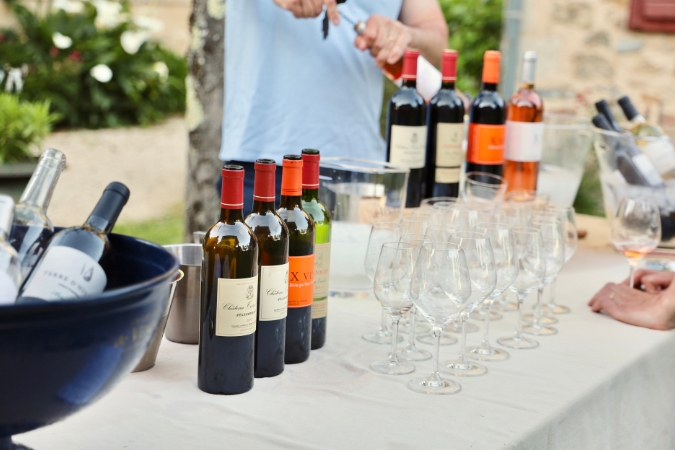
Dordogne wineries
Château Feely, Saussignac
An organic and biodynamic vineyard that runs tastings, wineeducation courses and wine-infused yoga classes. There are also two lodges on site. @chateaufeely
Château Terre Vieille, St-Sauveur
Belonging to the same family for three centuries, this estate produces AOP Pécharmant wines on blue clay and flint soil. @chateau_terre_vieille
Château des Vigiers, Monestier
A small, independent winery with plenty of different varieties, including Merlot, Malbec, Muscadelle and Semillon. Not to be confused with the hotel of the same name. 24240 Monestier
Château de Monbazillac, Monbazillac
This historic 16th-century château forms part of Monbazillac AOP, the world’s largest appellation for sweet white wines. @chateaumonbazillac
Dordogne hotels
La Chartreuse du Bignac, near Bergerac
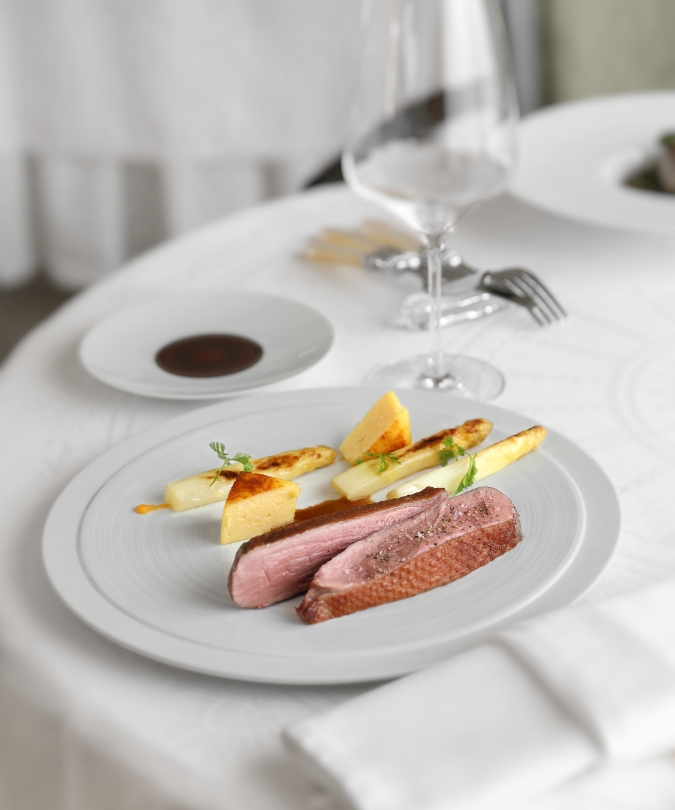
A 17th-century estate with hectares of forest land. Dine on local delicacies like duck breast and white asparagus. @lachartreusedubignac
Château de la Treyne Hotel, Lacave
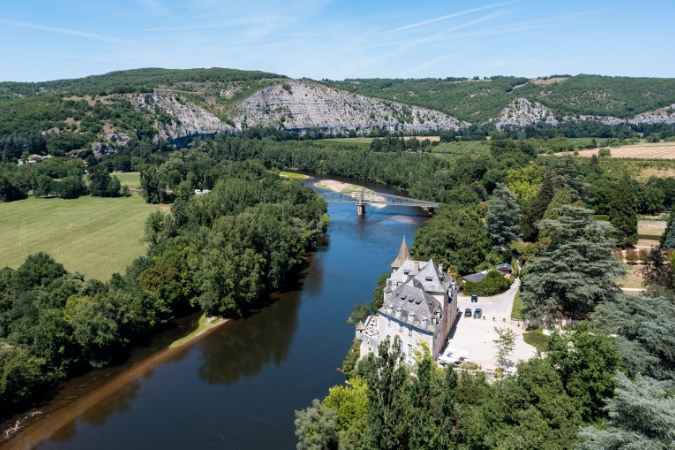
A Relais & Châteaux property on the banks of the River Dordogne, with Rapunzel-esque turrets and manicured gardens. @chateaudelatreyne
Domaine du Grand Merlhiot, Savignac
This boutique hotel along the Rue de Truffes Noires sits on a 94ha truffle estate, allowing for a full immersion in the regional delicacy. domainedugrandmerlhiot.com
Dordogne restaurants
L’Essentiel, Périgueux
A one-Michelin-starred spot near the cathedral. Dishes include lobster on caramelised leeks, and roast pigeon with a sugared-almond crust. restaurant-perigueux.com
Château de la Treyne Restaurant, Lacave
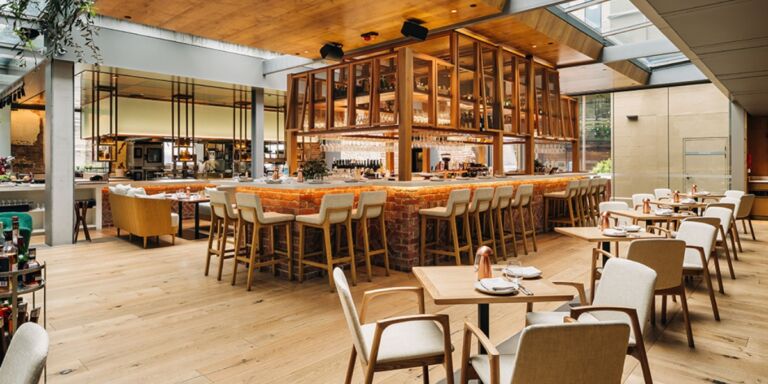
A Michelin-starred menu with a view to match. The terrace has views over the river, while the dining room is opulent in a Louis XVIII style. @chateaudelatreyne
Le Mouton Noir, Vergt
No frills – just convivial dining and hearty portions of regional specialities, including magret de canard and Montbéliard sausage with Reblochon. 1 Place de la Halle, 24380 Vergt
Le Grand Bleu, Sarlat
Affordable lunch menus in a high-end setting, with much of the produce sourced directly from Sarlat’s famous market. @legrandbleusarlatlacaneda
Activities
Truffle tours
Hunt your own truffles at Domaine Truffier de Saleix. With the help of four-legged hunters, you can pick your own and enjoy a truffle-themed lunch afterwards. Saleix, 24420 Sorges
Kayak expeditions
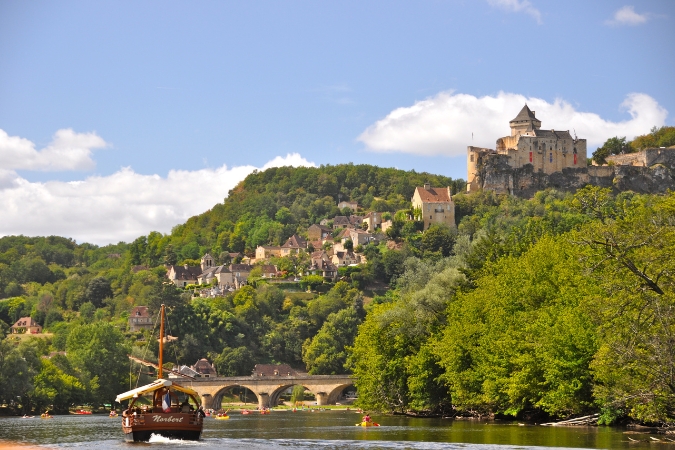
Cruise down the River Dordogne by kayak from Beynac and admire the châteaux from the water. Two-day river descents are also possible. @canoesperigordaventureloisirs
Market days
Hit the Wednesday and Sunday markets throughout the region; Sarlat, Bergerac and Périgueux are the largest. See the websites of local tourist offices for details.