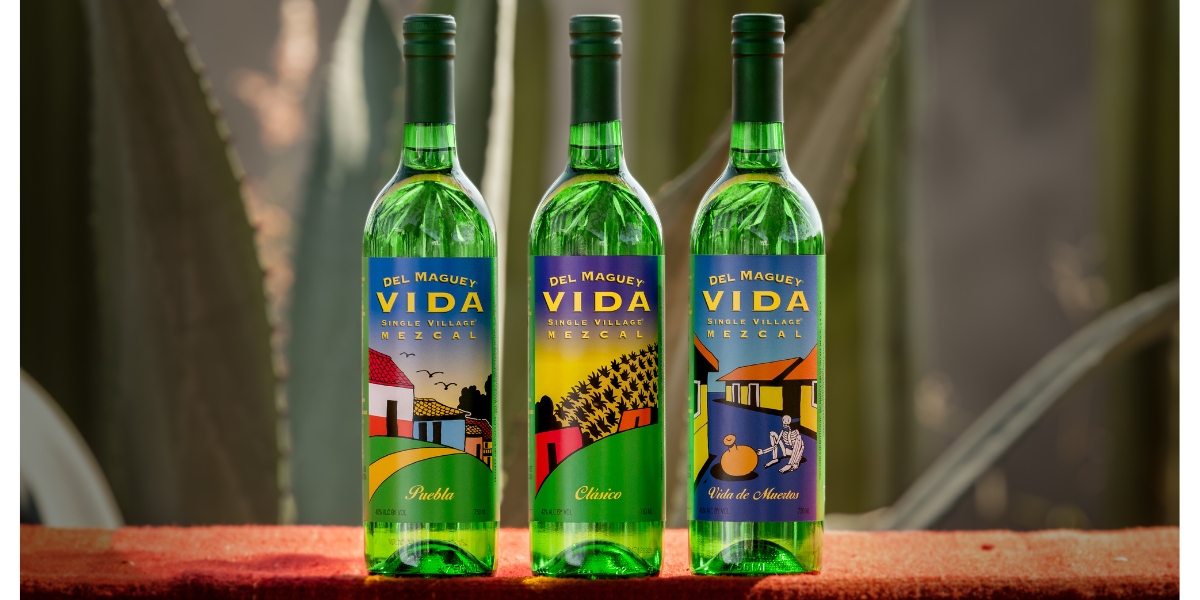
It’s difficult to imagine nowadays, given mezcal’s recent rise in popularity and the sheer number of brands and expressions available today, but in 1995, Del Maguey was the first of its kind. In contrast with the few mezcals that were exported at the time (industrial spirits characterised by the worm – gusano – floating in the bottom of the bottle), Del Maguey introduced the world to real mezcal and the mezcal category was formally born in the process. This year, the brand celebrates 30 years of championing the Mexican spirit.
‘Del Maguey changed the narrative entirely,’ says Steve Olson, an early and long-standing partner in the brand. ‘By importing traditional, single village-made mezcals from Oaxaca, we effectively created the mezcal category. The industry itself didn’t formally recognise mezcal as a distinct spirit for over two decades after the brand’s founding. Today, mezcal is one of the fastest-growing categories, celebrated for its complexity, diversity and deep cultural roots – a complete transformation sparked by Del Maguey.’
What makes Del Maguey unique is its single-village approach
Led by founder and visual artist Ron Cooper, Del Maguey introduced bartenders, spirits aficionados and beyond to the diversity of mezcal – its various terroirs, agave varieties and production methods – by taking a single-village approach, working with a number of mezcaleros and infusing art into every aspect of the brand.
‘By framing mezcal as a liquid art form and its makers as artists in their own right, we positioned mezcal as a product worthy of a global stage, influencing countless brands that followed,’ says Olson. ‘And nearly 30 years on, Del Maguey remains not only a pioneer but the world’s biggest mezcal brand.’
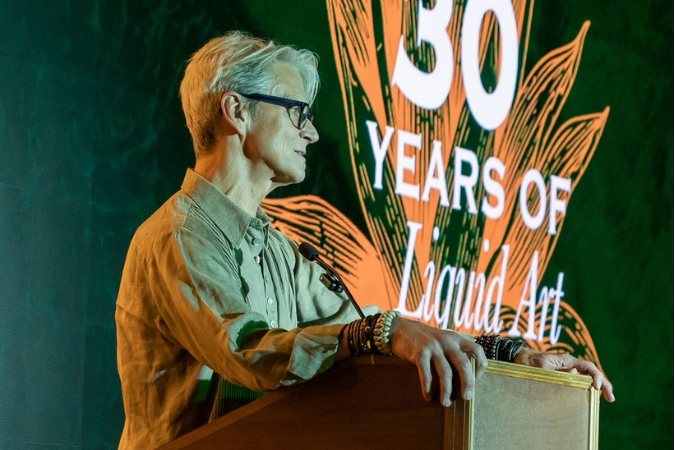
The origins of Del Maguey
An established visual artist by the time he founded Del Maguey, Ron Cooper was born in Ojai, California. Visiting a small weaving village in Oaxaca, he came across mezcal purely by chance and was captivated. He began introducing the spirit to his family and friends, ultimately spreading the word far further afield via Del Maguey.
‘Launching Del Maguey in the mid-1990s was a leap of faith. Mezcal had no market presence, no category recognition and almost no consumer awareness. No one drank it and the few people that had even heard of it were under the impression mezcal was like moonshine that would make you go blind. It was seen as something to be avoided not explored,’ says Olson.
The bottles are not just vessels for mezcal but for storytelling and culture
‘We had to take a grassroots approach to change this – one bartender, one chef, one sommelier at a time. Ron and the Del Maguey family took the time to educate, pour samples and share stories face-to-face and hand-to-hand. It wasn’t just about building a brand but an entirely new appreciation for what mezcal could be, and we were reliant on the hospitality community as the first adopters and advocates.’
In 2010, with the aim of making mezcal even more accessible, Del Maguey Vida was launched, an approachable – and more affordable – expression. Today there are three expressions in the Vida Collection, alongside a range of single-village mezcals.
What goes into making Del Maguey?
What makes Del Maguey unique and helped drinkers understand mezcal more generally is its single-village approach. The extensive range – spanning 20 different expressions from 12 varieties of agave – is made by hand in ten single villages across Mexico’s Oaxaca and Puebla, by Zapotec and Mixtec farmer families.
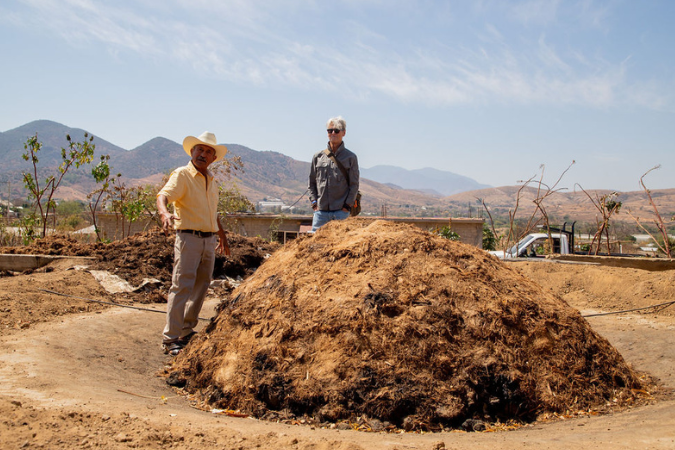
Like all mezcal, these spirits are made from agave, the most common variety used for mezcal being Espadín. These are grown, harvested and then roasted in earthen pits. The next step is to crush them, typically using a large volcanic stone known as a tahona. The juices are fermented in wooden vats or, sometimes, in animal hides. The fermented juice is then distilled, usually twice, in either column or pot stills.
How did the design come about?
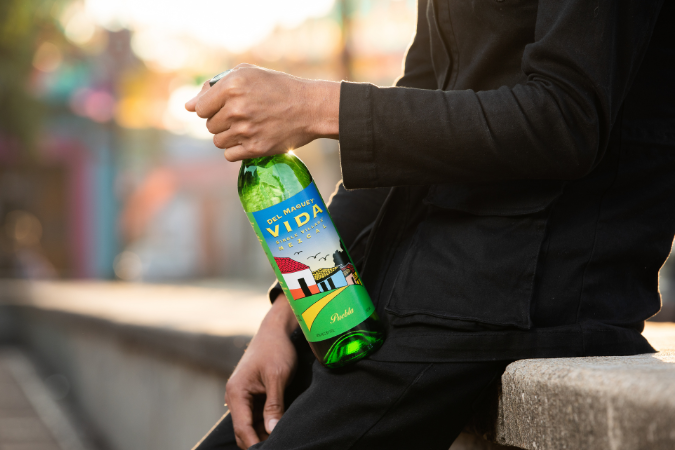
Each illustrated label in the Del Maguey range tells a distinct story. ‘Art is embedded in the DNA of Del Maguey,’ says Olson. ‘Ron Cooper is a brilliant and well-respected visual artist and he considered the mezcal liquid art, with the producing families, the artists and the production process a type of performance art. From the slow-roasting of agave underground to the hand-crushing, wild fermentation and distillation – every step was a form of expression, and every maker a creative force.’
And yet the labels don’t feature Cooper’s art but rather adaptations of drawings by a close friend of his, the late artist Ken Price. ‘As Ron saw it, the bottles were not just vessels for mezcal, but for storytelling and culture,’ says Olson.
Del Maguey today
While the range of expressions has changed, as has the scale and reach of the brand (it was acquired by multinational Pernod Ricard in 2017) the core approach has remained the same. ‘Del Maguey’s evolution has been about expanding awareness and access, never about changing the mezcal,’ says Olson. ‘Other than an increase in quantities of production on a sustainable and organic basis, the liquid remains the same and always will.’
The year-long celebration of Del Maguey’s 30th anniversary, which began with a gathering in Oaxaca in Mexico, will be followed by a global tour of events.
As the brand and the mezcal category have both grown, Del Maguey has invested in healthcare and ecological initiatives covering aspects such as reforestation, waste upcycling and beekeeping. ‘As mezcal becomes more global, the challenge and commitment is to scale without dilution and to stay grounded in tradition while reaching new audiences,’ adds Olson. ‘It’s all about maintaining our commitment to the producing families and their communities, and to sustainability in every sense of the word: social, economic, environmental.’