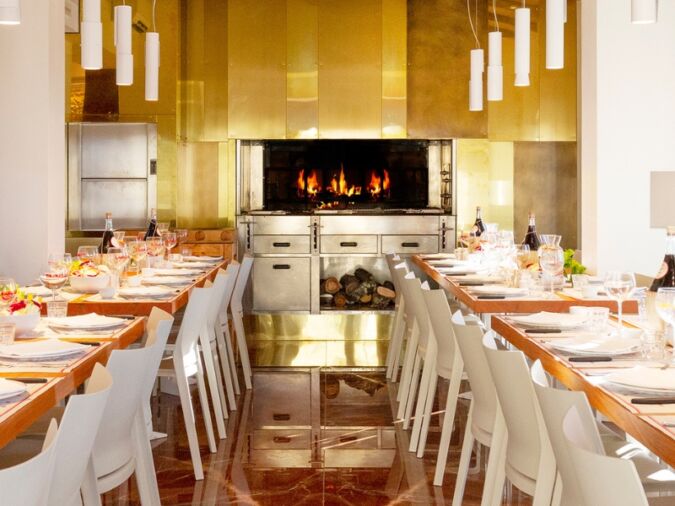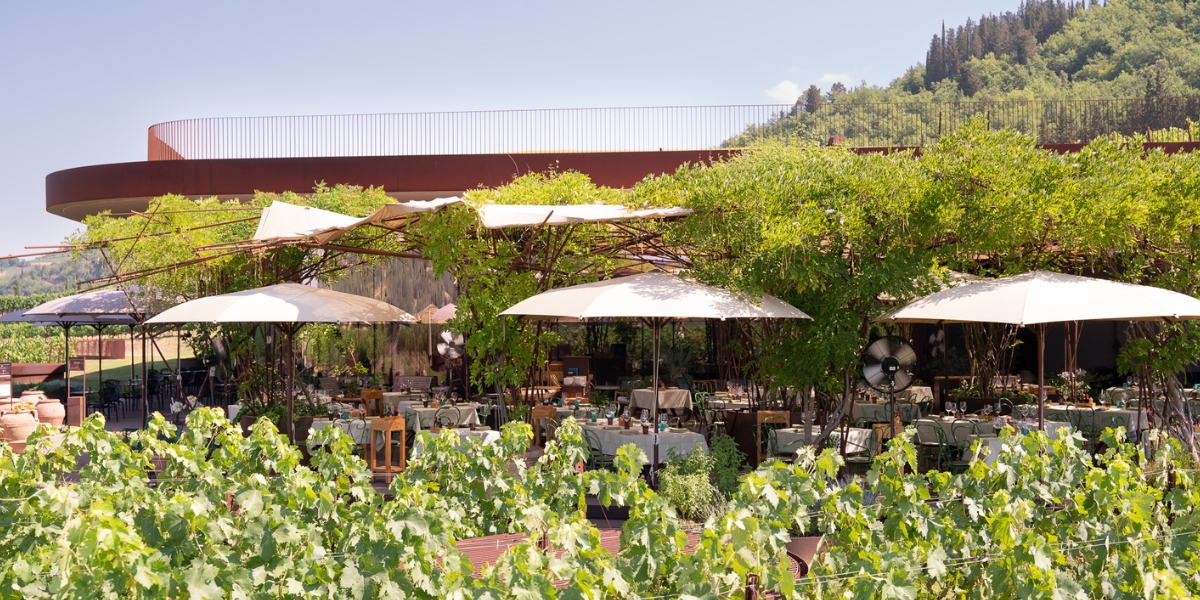
Many of Tuscany’s wineries offer guests the opportunity to pair their wines with local cuisine, but some have taken this further, establishing full-scale restaurants that have become integral to the region’s food and wine culture. Eating out in Italy is often about conviviality – simple dishes, good company, and well-chosen wine. Trattorias, osterias, and pizzerias dominate the landscape, but winery restaurants add another dimension.
Many of Tuscany’s winery restaurants are set in historic estates with deep-rooted traditions, some dating back to the Renaissance and beyond. Once seen as overly formal or old-fashioned, these grand dining halls – adorned with family portraits and noble insignia – are now at the forefront of the growing demand for authenticity. With direct access to estate-grown ingredients and an inherent sense of place, they are uniquely positioned to offer immersive, farm-to-table experiences that blend storytelling with exceptional hospitality.
When a winery creates a restaurant, the menu is never an afterthought. Every dish is designed to enhance the wines, forging a deeper connection between the glass and the plate. While a tasting room visit offers insight, there’s no better way to experience a wine’s true character than by sharing a bottle at the table, surrounded by food that speaks the same language. Take a look at some of the best winery restaurants in Tuscany below.
The best winery restaurants to visit in Tuscany
Poggio Rosso (San Felice)
Chianti Classico
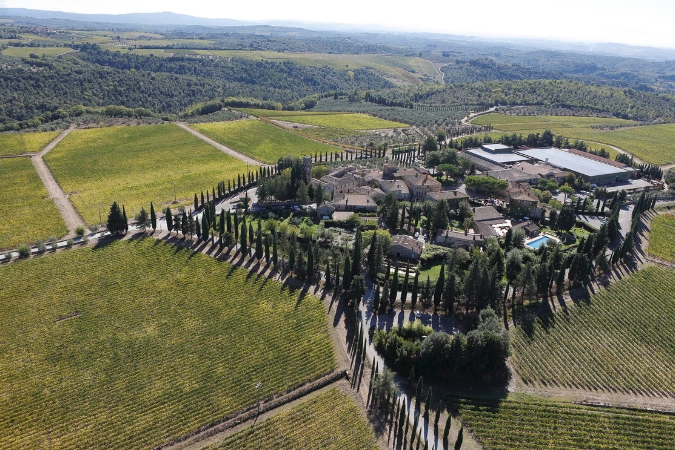
Not every winery restaurant in Tuscany has to be a traditional experience. At Poggio Rosso, the kitchen embraces an international perspective, crafting dishes that draw on global influences while still incorporating ingredients from the estate, such as fresh herbs from its garden. This approach has earned the restaurant a Michelin star, recognising its ability to balance innovation with local identity. Set within the Borgo San Felice estate, the dining space blends historic charm with contemporary elegance. Chianti Classico and Super Tuscan wines feature heavily on the list, alongside selections from sister wineries in Bolgheri and Montalcino. Poggio Rosso offers a modern fine-dining experience in the heart of Tuscany, and when combined with a stay at the San Felice hotel, makes for a luxurious time in Siena’s Castelnuovo Berardenga.
View this post on Instagram
Il Cavaliere
Castello di Gabbiano
Alfresco dining is symbolic of the good life, and the outdoor lunches at Il Cavaliere are as evocative as the postcards. Il Cavaliere is an extension of the Castello di Gabbiano estate and is set in a carefully restored 16th-century farmhouse surrounded by vineyards. The interiors feature stone walls and frescoed ceilings, while the outdoor terrace provides a peaceful setting overlooking the estate. The menu follows the rhythm of the seasons, using fresh ingredients from local producers with a focus on classic Tuscan recipes. Dishes include handmade pasta, risottos, and the usual Florentine specialties. The pigeon, when it’s on the menu, comes highly recommended. The wine list highlights Castello di Gabbiano’s range of Chianti Classico, along with other top wines from the region and beyond. The combination of historical atmosphere and considered cooking makes Il Cavaliere a distinctive part of Gabbiano’s winemaking heritage and this is a much-loved reference on Chianti’s dining scene.
Vinsantaia (Capezzana)
Carmignano
Vinsantaia is a restaurant deeply connected to the region’s winemaking traditions. Housed, as you might deduce, in a former Vinsantaia, where Vin Santo barrels once aged, the space retains a rustic elegance, with exposed beams and soft lighting creating a warm atmosphere. The menu highlights Tuscan flavours in a contemporary style, featuring fresh pasta, local meats, and estate-grown produce. The restaurant is part of the historic Capezzana estate in Carmignano DOCG which means the wine list focuses on the local wines, particularly the historic Sangiovese-Cabernet blends that define the appellation. Back vintages of Vin Santo, Capezzana’s flagship sweet wine, are also available and are highly recommended. Many of the ingredients are sourced fresh from the property’s organic farm. Thoughtful cooking and historic surroundings make this one of the most important dining spots in Carmignano.
View this post on Instagram
Osteria Enoteca San Guido (Tenuta San Guido)
Bolgheri
Situated in the heart of Bolgheri, Osteria Enoteca San Guido offers a rare opportunity to experience the wines of Tenuta San Guido alongside carefully curated dishes. Sassicaia may hog the headlines, but guests will no doubt find themselves enjoying other wines from the estate, such as Guidalberto and Le Difese, which provide insight into the broader winemaking philosophy of Tenuta San Guido. But the restaurant has a strong wine list showcasing nearby estates, as well as plenty of notable domaines from all over France. The space, which is also open for coffee and pastries, reflects the estate’s understated elegance, with a rustic interior. The menu showcases local seafood, meats, and seasonal produce presented in a contemporary style. While the cuisine is deliberately unfussy, the wine list is the true highlight; it even features a vertical selection of Sassicaia, one of the world’s most celebrated wines. There’s lots of quiet sophistication here.
Il Ristoro di Ama (Castello di Ama)
Chianti Classico
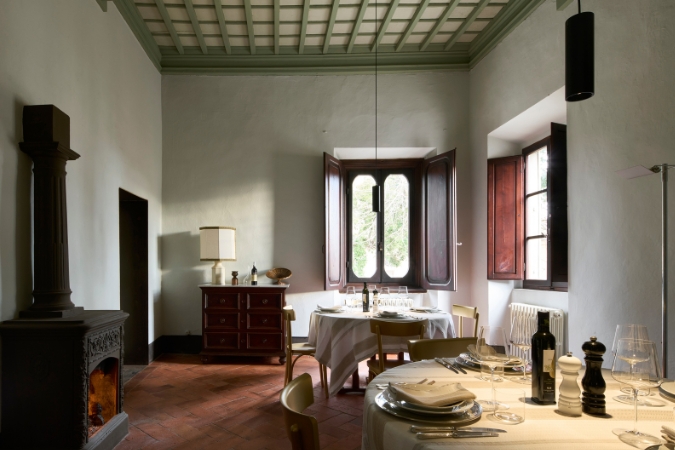
Il Ristoro di Ama, the fine-dining restaurant of Castello di Ama in Chianti Classico, offers an elegant yet relaxed experience deeply rooted in the estate’s traditions. Housed in a historic stone building, it serves a seasonal, ingredient-driven menu designed to pair seamlessly with the estate’s Chianti Classico and single-vineyard Gran Selezione wines. The signature wild boar ragù over fresh pappardelle is a must-try, capturing the magical simplicity of Tuscan cuisine. Guests can dine on the terrace overlooking the vineyards, or indoors surrounded by contemporary art from the estate’s collection. For an even more immersive experience, the ‘Feast of Villa Pianigiani’ offers a special culinary celebration, bringing together an indulgent mix of the estate’s wine and food traditions. Part of the fabric of the local fine-dining scene, Il Ristoro di Ama is easily one of the best winery restaurants in Tuscany.
View this post on Instagram
Capezzine (Avignonesi)
Montepulciano
The Avignonesi estate near Montepulciano has gone from strength to strength over the last decade, and today produces some of the best Vino Nobile you can find. Their Capezzine restaurant continues the winery’s commitment to organic and biodynamic farming through its use of sustainably grown fruit and vegetables. Housed in a beautifully restored farmhouse, the cosy dining space is stylishly understated, with wooden beams and large windows that open onto the vineyards. The menu follows a farm-to-table approach, using ingredients sourced from the estate’s gardens and local producers. Traditional Tuscan dishes dominate, designed to complement Avignonesi’s range of elegant Vino Nobile di Montepulciano and Toscana IGT wines. Wine pairings often include vertical tastings of Avignonesi’s important Vin Santo, the company’s celebrated sweet wine. With a focus on estate-grown produce and an intimate connection to the surrounding vineyards, Capezzine embodies the slow food movement and its connection with the land.
View this post on Instagram
Indigeno (Salcheto)
Montepulciano
Salcheto’s Montepulciano property is a must-stop for both its wines and Indigeno, the sustainable, forward-thinking on-site restaurant. Its design reflects the ethos of the winemaking – natural materials, minimal intervention, and a seamless connection to the surrounding vineyards. The menu is centered on organic, locally sourced ingredients, with a strong emphasis on plant-based and low-impact dishes that chime with Salcheto’s commitment to biodynamic viticulture. Given those values, the menu is extremely local, with game, courtyard geese and the freshwater fish of Montepulciano featuring prominently. The wine list focuses on Salcheto’s Vino Nobile di Montepulciano and includes a range of no-sulphur-added wines. A very on-trend stop with a focus on sustainability.
View this post on Instagram
Il Brunello (Castello di Velona)
Montalcino
Il Brunello is the signature restaurant of Castello di Velona, a hilltop estate overlooking the Val d’Orcia in the south of the region. Found within the original structure of the medieval castle, it offers a formal dining experience shaped by the traditions and ingredients of Montalcino and the nearby Amiata region. Set within the castle’s original structure, the restaurant’s stone walls, vaulted ceilings, and panoramic terraces frame sweeping views of the Val d’Orcia. The menu follows a seasonal, ingredient-driven philosophy, blending Tuscan tradition with contemporary finesse. Estate-grown olive oil, wild herbs, and carefully sourced regional ingredients shape elegantly plated dishes and tasting menus that balance rustic authenticity with Mediterranean influences. The wine list is deeply rooted in Brunello di Montalcino, including selections from the estate’s own five hectares of vineyards. Great for couples sharing a bottle amidst white tablecloths, candlelight and an open fire.
Rinuccio 1180 (Antinori)
Chianti Classico
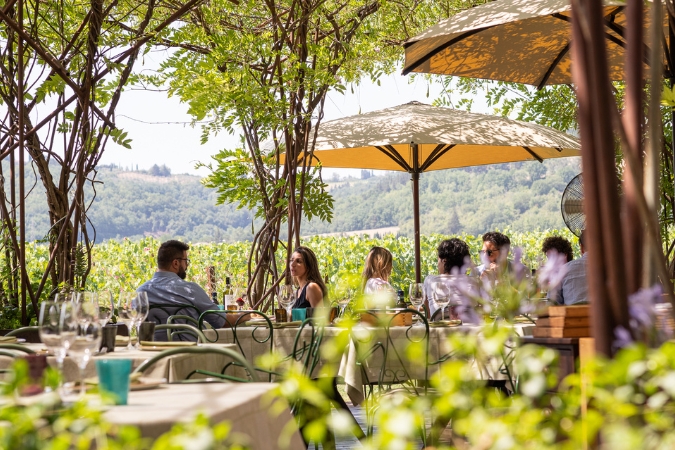
Antinori has developed a stylish rooftop terrace located within the flagship Chianti Classico winery, where impressive contemporary architecture blends with the landscape. Named after Rinuccio di Antinori, who in 1180 was the first-recorded Antinori family member to make wine, the restaurant sits atop the winery, offering sweeping views of the vines. The menu draws inspiration from Tuscan tradition, using high-quality local ingredients, while incorporating a modern approach to presentation and technique. The Florentine T-bone with roasted potatoes is highly recommended and goes with most reds on the wine list. The sleek, open-dining space reflects the winery’s avant-garde aesthetic, while the outdoor terrace provides a direct view of the land. It acts as a natural extension of the Antinori brand, providing a hospitality space that combines both heritage and innovation.
View this post on Instagram
Osteria di Brolio (Ricasoli)
Chianti Classico
Castello di Brolio is another of Tuscan wine’s legendary landmarks. The osteria, tucked into the landscape of Chianti Classico, just below the castle walls, blends tradition with modern creativity. The restaurant’s setting, framed by vineyards and woodland, offers a relaxed yet polished dining space, where the focus is on high-quality seasonal ingredients sourced from local producers and the estate’s own gardens. Under the direction of chef Franco Sangiacomo, the kitchen presents a menu that is inspired by the region’s traditions and features the likes of creamy bean soups and sirloin steaks, while allowing room for inventive pairings, such as lamb ravioli with goat cheese and black garlic, local fallow deer with cherries and chocolate, or cuttlefish pie in chickpea sauce. Each dish is crafted to complement the wines of Ricasoli, from the structured Castello di Brolio Gran Selezione to the impressive Casalferro Merlot. With its balance of research, regionality, and precision, Osteria di Brolio offers a dining experience that reflects the depth of Chianti Classico’s food and wine culture. One of the most interesting winery restaurants in Tuscany.
Casanova di Neri
Montalcino
Having produced outstanding wines for over 50 years, Casanova di Neri is one of the most revered names in Montalcino. The estate’s Relais Restaurant offers a refined dining experience that highlights the estate’s high-scoring Brunello. Seasonal ingredients, including the estate’s extra virgin olive oil, are carefully selected to create hearty dishes that can stand up to Casanova di Neri’s structured single-vineyard reds. Guests can enjoy a meal that showcases famous wines such as Cerretalto and Giovanni Neri. Available exclusively for adult visitors, or guests staying at the Relais, the restaurant experience can be paired with a wine tasting or an estate tour, giving a window into one of the most famous names in southern Tuscany.
View this post on Instagram
Novecento (Dievole)
Chianti Classico
Novecento takes its name from the Dievole winery’s Chianti Classico Riserva, first produced in 1990 to mark Dievole’s 900th anniversary. The menu follows a seasonal, ingredient-driven philosophy, incorporating wild herbs foraged from nearby fields, ancient grains, and produce from trusted local suppliers. Dishes reflect traditional Tuscan flavours reinterpreted, from handmade pasta, to fresh vegetables and grilled meats. In summer, meals are served in the Aione courtyard, surrounded by fragrant roses, while winter dining takes place in the warm, inviting rooms of an 18th century villa. Adjacent to the restaurant, the Lounge Bar and Giardino del Tasso provide a relaxed setting for an aperitivo, overlooking the Sangiovese vineyards and olive groves.
View this post on Instagram
Osteria di Passignano
Chianti Classico
Antinori’s Osteria di Passignano is serenely situated between the vineyards of Chianti Classico, and is deeply connected to the historic Abbey of Passignano, a medieval monastery with a legacy in viticulture dating back over a thousand years. The restaurant sits in the shadow of this historic landmark, blending tradition with a contemporary approach to Tuscan cuisine. The menu focuses on seasonal ingredients, sourced from local producers and the surrounding countryside, with dishes designed to highlight the flavours of the region and partner Antinori’s portfolio of wines, particularly selections from the Badia a Passignano estate. The setting, with its vaulted stone interiors, views of the abbey’s ancient walls, and access to its herb gardens, provides an evocative connection to the history and winemaking heritage of the area.
Valdonica
Maremma
The Valdonica Winery Restaurant offers simple, local cooking amidst the beauty of the surrounding vineyards of the Maremma and distant Mediterranean views. Led by Chef Nicola Antonetti, originally from Lucca, the kitchen presents a menu inspired by Tuscan tradition, refined with an international perspective. Locally sourced ingredients shape each dish, reflecting the estate’s commitment to sustainability and organic farming. Guests can dine in the Wine Lounge and Terrace, where the open landscape is the perfect backdrop for enjoying Valdonica crisp Vermentino or fragrant Sangiovese-based wines. Produced with a strong focus on biodynamics, the wines reflect the fresh, rugged hills of the Maremma. Seasonal opening hours apply, but this is a useful reference when exploring the area around Massa Marittima, Roccatederighi and the valleys north of Grosetto.
View this post on Instagram
Il Pievano (Castello di Spaltenna)
Chianti Classico
The one-thousand-year-old monastery at Castello di Spaltenna is an atmospheric setting for its restaurant. Il Pievano has held a Michelin star since 2017, offering a thoughtful balance of tradition and creativity. The restaurant’s setting is as captivating as its cuisine, with dining available in the elegant Sala dei Papi or the tranquil inner courtyard. Greek-born Chef Stelios Sakalis reinterprets both Tuscan and Greek flavours and crafts seasonal menus, including a surprise tasting menu, that highlight both regions from a contemporary perspective. Dishes such as acorn-flour pasta served with red prawns cooked with feta cheese, saganaki-style, showcase his innovative fusion, while a selection of refined starters and pastry desserts add to the experience. The wine list focuses on the castle’s estate-grown Chianti Classico wines. Although Il Pievano closes for the off season, throughout spring and summer it is easily one of the most important winery restaurants in Tuscany’s fine-dining repertoire.